
It was a Tuesday, a little after three in the afternoon, and I was standing in front of the pantry. Again. Same shelf, same granola bar — the one with the chocolate drizzle I’d bought so many times the barcode was practically muscle memory. I wasn’t hungry. Not really. I just wanted something. A small break in the day, a little treat to reset before the evening rush.
I ate the granola bar. I don’t think I tasted a single bite.
That was the moment it clicked: our family’s snacking had gone completely on autopilot. Nothing we grabbed was bad, exactly — it was just familiar to the point of being invisible. The same three things, on loop, for what felt like years. Then a friend left a box on her kitchen counter one weekend, packed with wrappers I couldn’t read, in colors that never show up on an American snack aisle. There was something with a cartoon octopus on it. I asked what it was, she told me, and that little box quietly rearranged how the four of us think about the afternoon slump.
When “Grabbing Something” Becomes the Whole Ritual
Here’s what I eventually figured out: the problem was never snacking. It was snacking blindly.
Most of my between-meal reaching had nothing to do with hunger. It was boredom, or a need for a two-minute pause, or just habit wearing a groove into the day. And boredom-snacking is exactly where portions get sloppy — you keep dipping into the big bag because your mouth is busy but your attention is somewhere else entirely.
The fix, at least for us, wasn’t more willpower. It was making the snack itself worth slowing down for. When the thing in your hand is unfamiliar — when you genuinely don’t know if you’re about to love it or make a face — you actually pay attention. You taste it. You have an opinion. That small shift, from mindless to mindful, turned out to matter more than any rule about “cutting back.”
To be clear, I wasn’t trying to quit snacking. I was trying to make it feel like something again.
One Country, One Box, Zero Effort
So what actually shows up at your door?
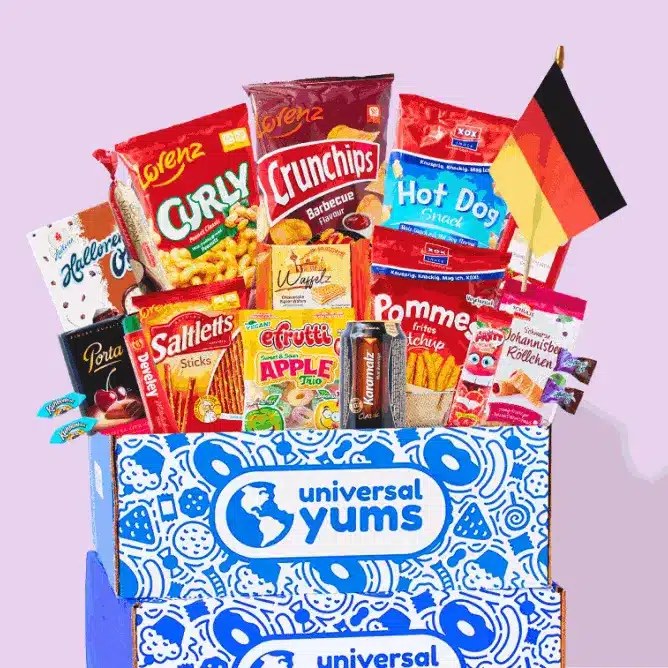
The box my friend had was from Universal Yums, an international snack subscription that sends a different country’s snacks every single month. One month it’s South Korea, the next it’s Italy, then Greece, then Germany. You don’t pick and hunt and read a hundred reviews — a curated haul just arrives, and it’s a genuine mix of sweet and savory, not a candy dump.
What sold me, though, was the booklet. Each box comes with a little guide — 16 to 20 pages depending on your box — full of trivia, games, and recipes about that month’s country. More usefully for anyone who reads labels: the snacks come with translated product names and ingredient lists stuck right on the packaging, so you’re never squinting at a wrapper trying to guess what you’re eating.
There’s also a scorecard. Everyone in the house rates each snack, and — I did not expect this — it becomes a low-key competition. I still remember the truffle-flavored chips from an Italy box that split our table down the middle: the kids were horrified, my partner and I quietly finished the bag. That little argument was more fun than most of what we’d been watching on TV that week.
The Wellness Case for a Snack Box (No, Really)
I know how it sounds to put “snack subscription” and “healthy” in the same sentence, so let me be honest about what this is and isn’t.
It’s not health food. It’s better snacking — and for a house like mine, that distinction is the whole point.
A few things won me over:
Portions come built in. International snacks tend to arrive in modest, single-serving sizes rather than the bottomless family-size bag I used to graze from without noticing. When the treat has an obvious end point, you stop when it’s done instead of when the bag is empty.
Curiosity beats craving. A lot of my old snacking was just chasing novelty. Trying one genuinely new thing scratches that itch far better than a fourth handful of the usual — and usually with less of it.
It’s screen-free time we didn’t have to schedule. Tasting and rating snacks together turned into an actual pocket of family conversation on weeknights, which, if you have kids, you know is not nothing.
The learning is a stealth bonus. My youngest asked me where Greece was because of a cookie. That’s the kind of “lesson” that actually sticks, precisely because nobody’s calling it one.
None of this makes it a superfood. It makes it a small, more intentional pleasure — the kind you can build into a health-minded life without pretending it’s kale.
Picking Your Size (and Your Price)
Once I decided to try it for real, the choice came down to three box sizes. Prices shift with promotions and whether you prepay, so treat these as ballpark — but here’s roughly how it breaks down.
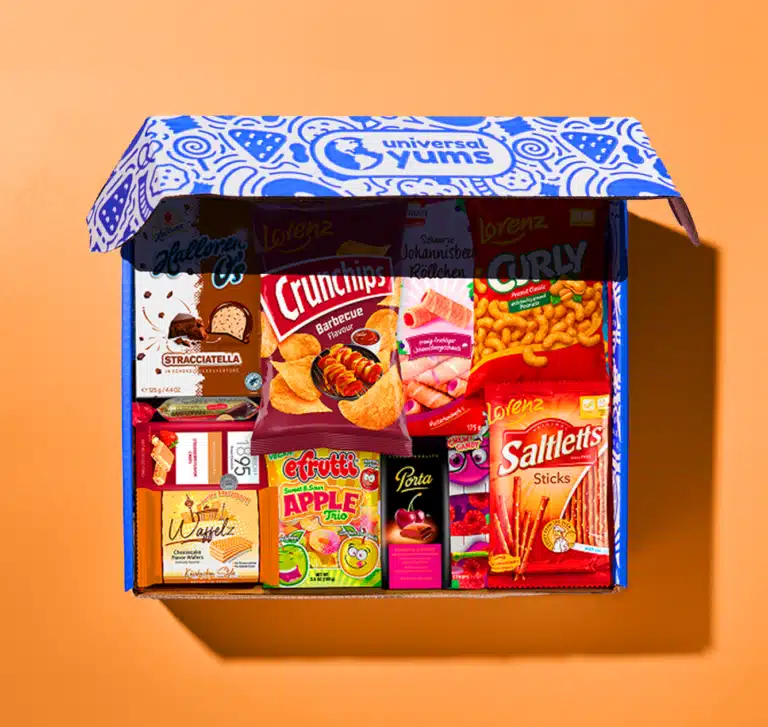
The Yum Box is the starter: about 5 to 7 snacks plus a 16-page booklet, and it lands at somewhere around nineteen dollars a box if you prepay (a dollar or two more month to month), with free shipping in the U.S. If it’s just one or two of you, or you want to dip a toe in before committing, this is the one.
The Yum Yum Box is the middle child, and it’s the one most people land on for good reason — roughly 10 to 12 snacks (every snack in the Yum Box, plus five more) and a bigger 20-page booklet, for somewhere in the high twenties per box. It’s sized for three or four people, which meant everyone in my house got a real taste of each thing instead of fighting over the last one. This is the tier I settled on and stuck with.
The Super Yum Box is the big one: 15 to 18 snacks plus a full-size drink, along with bonus recipes and activities, running a little over forty dollars a box. If you’ve got a full house, a game night, or a genuinely serious snacker in your life, this is the crowd-pleaser.
A couple of practical notes. Prepaying for a longer stretch drops the per-box price a few dollars, while paying month to month keeps you flexible — a fair trade either way. And if a past country caught your eye, you can usually order older boxes as one-offs without signing up for anything.
The way I finally justified it: broken down per snack, it’s a couple of dollars a treat — less than the coffee I’d grab on the way home — except this one turns into four separate afternoons of the family actually talking to each other. You can see the current box sizes and pricing here if you want the up-to-date numbers.
The Fine Print I’d Want a Friend to Tell Me
Nothing’s perfect, and I’d feel like a bad narrator if I only handed you the good parts.
The biggest one: these snacks are not tailored to allergies or specific diets. The translated labels help a lot, but if someone in your house has a serious restriction, you’ll want to read every wrapper before it’s opened — and accept that some snacks simply won’t be for them.
It’s also a treat line, not a grocery replacement. I budget it the way I’d budget a small monthly fun thing, not as part of the food bill. If you go in expecting it to feed the family, you’ll be disappointed; if you go in expecting a monthly little adventure, it delivers.
And if you’re outside the U.S., international shipping adds to the cost, so factor that in.
For the record, I didn’t love everything. There was a licorice-adjacent candy from a Northern European box that I quietly relocated to the “guests only” bowl. But a box I don’t finish 100% of is kind of the point — I’d rather try twelve things and adore nine than eat the same predictable snack a thousand times.
There are other players in this space, too — TokyoTreat and Bokksu lean heavily into Japan, and SnackCrate does a similar around-the-world thing. They’re all decent. For my family, the variety-per-dollar and the “different country every month” surprise is what kept us subscribed rather than shopping around.
If You Want to Try It
Starting is genuinely simple. You pick a box size, choose the country you’d like to begin with — Japan, Greece, Germany, South Korea, and the Netherlands were all on the list when I looked — and decide between paying monthly or prepaying for a stretch to bring the cost down. That’s it, and you can skip or pause when life gets busy, which took the pressure off committing.
New subscribers can usually grab a free mystery gift with their first box, too, so it’s a low-stakes way to find out whether your household turns into snack critics like mine did. If you’re curious, you can start your first box over here and just see what shows up.
As for me — I’m still standing in front of the pantry at three in the afternoon. The difference is what’s waiting there now. This week it’s a box from the Baltics, half-opened, with a scorecard on the counter and a couple of wrappers I still can’t pronounce. I taste every bite these days. Turns out that was the whole fix.