
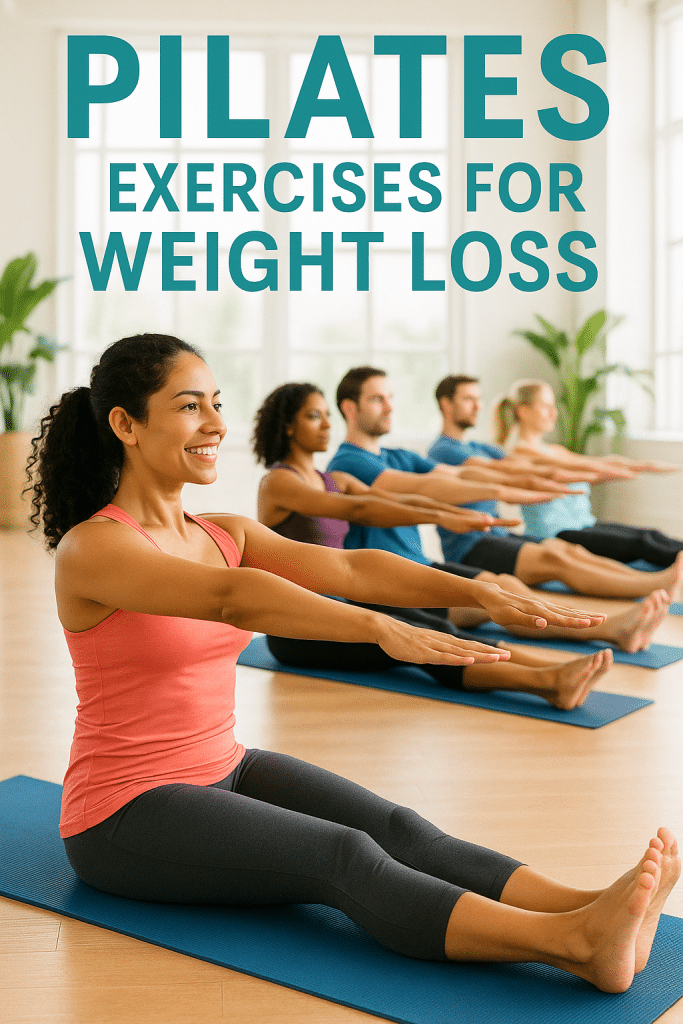
Are you ready to transform your workout routine and shed those stubborn pounds with a graceful, mindful approach? As someone deeply passionate about fitness, I’m excited to share how Pilates exercises for weight loss can be a game changer. More than just a core workout, Pilates enhances strength, flexibility, and mental focus—all critical ingredients for sustainable fat loss. Whether you’re a beginner or seasoned athlete, mastering Pilates can help you burn calories, sculpt lean muscle, and boost your metabolism.
In this comprehensive guide, I’ll walk you through the science behind Pilates and weight loss, explain the key principles to maximize fat burning, detail five powerful Pilates exercises that deliver results, and introduce advanced techniques and equipment to elevate your sessions. Plus, I’ll share tips on designing a weight loss routine, recovery strategies, and nutrition advice—all tailored to fitness enthusiasts seeking effective workouts and recovery tips.
Let’s dive in and explore how Pilates can help you achieve your weight loss goals with strength, grace, and focus!
Understanding Pilates and Its Role in Weight Loss
Before you roll out your mat, it’s essential to grasp how Pilates actually supports weight loss. Unlike high-impact cardio or heavy lifting routines, Pilates targets your body’s deep core and stabilizing muscles while fostering mindful breathing and controlled movement.
How Pilates Enhances Metabolism and Calorie Burn
One of the most important questions fitness enthusiasts ask is: Can Pilates really burn fat? The answer is a resounding yes—but it works a little differently from traditional fat-burning exercises.
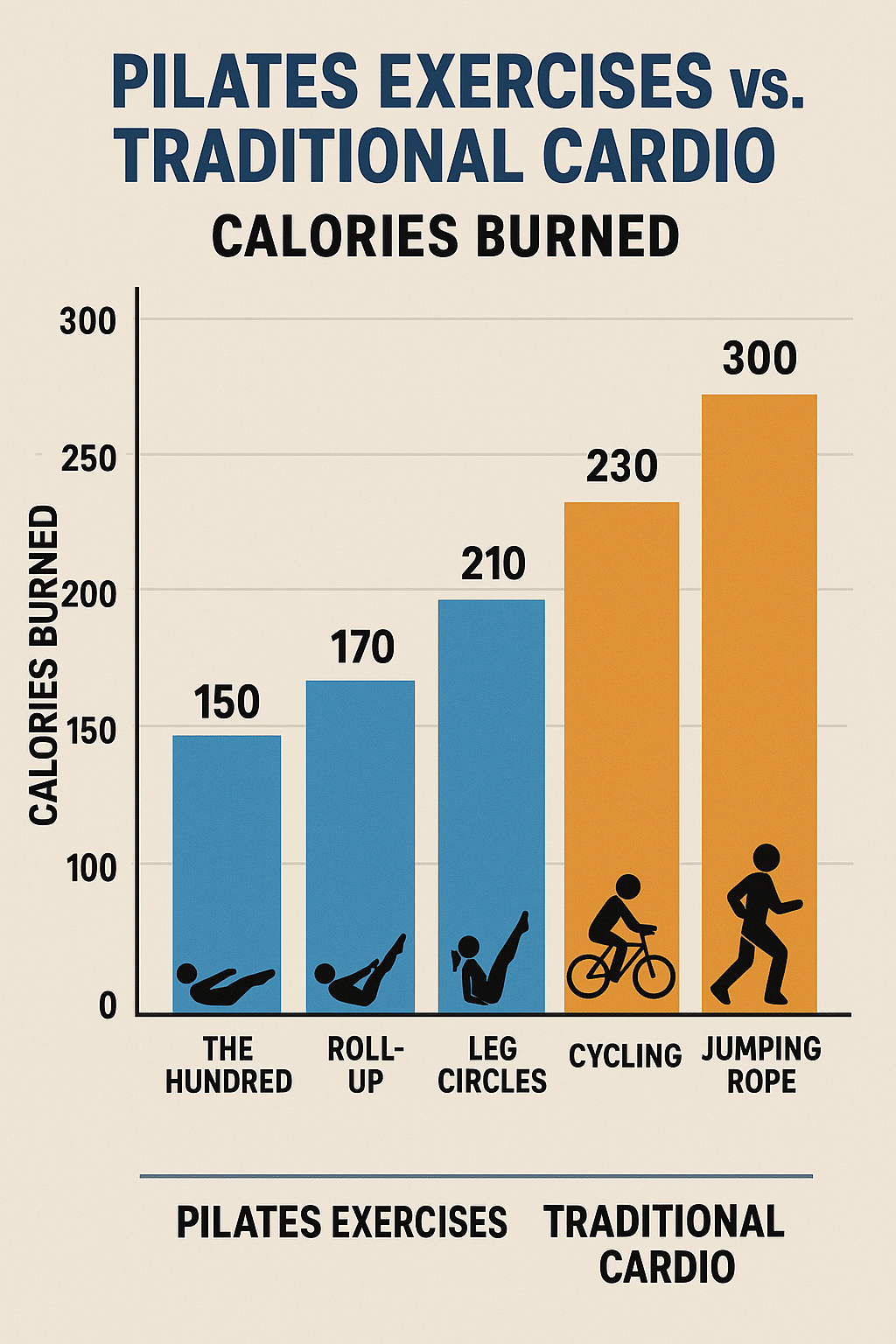
Pilates sessions increase your metabolism primarily by building lean muscle mass. Muscle tissue requires more energy to maintain than fat, so as you strengthen your core and other muscle groups with Pilates, your resting metabolic rate improves. This means you burn more calories even at rest. Research indicates that a vigorous Pilates workout can burn between 175 to 250 calories per 45-minute session depending on your intensity and body weight.
Additionally, Pilates engages multiple muscle groups simultaneously, raising your overall energy expenditure. The low-impact, full-body nature of Pilates supports consistent exercise without undue joint stress—a huge plus for those prone to injury.
Building Lean Muscle and Improving Posture Through Pilates
One often overlooked benefit of Pilates for weight loss is the transformation of your physique. Pilates emphasizes slow, controlled movements that build lean muscle without bulking up. This lean muscle development not only helps you look toned but also boosts your metabolic efficiency.
Posture improvement is another critical advantage. By correcting posture and aligning your skeletal structure, Pilates helps you move more efficiently and prevents compensatory patterns that waste energy. Enhanced posture also aids digestion and circulation, indirectly supporting metabolic efficiency.
The Mind-Body Connection: Breath Control and Focus in Pilates
Pilates isn’t just physical exercise; it’s a mental workout too. Breath control—often called breath work—coordinates with movement to deepen muscle activation and improve oxygen delivery. This mind-body connection heightens awareness, reduces stress (a known sabotager of weight loss), and encourages mindful eating habits.
Mastering breath control also increases your endurance during workouts, allowing you to push harder safely. The focus Pilates demands teaches discipline and consistency, essential for long-term weight loss success.
Key Pilates Principles to Maximize Fat Burning
Understanding Pilates’ foundational principles helps you approach your workouts with intentionality, so every session counts toward your weight loss goals.
Core Strengthening and Deep Muscle Activation
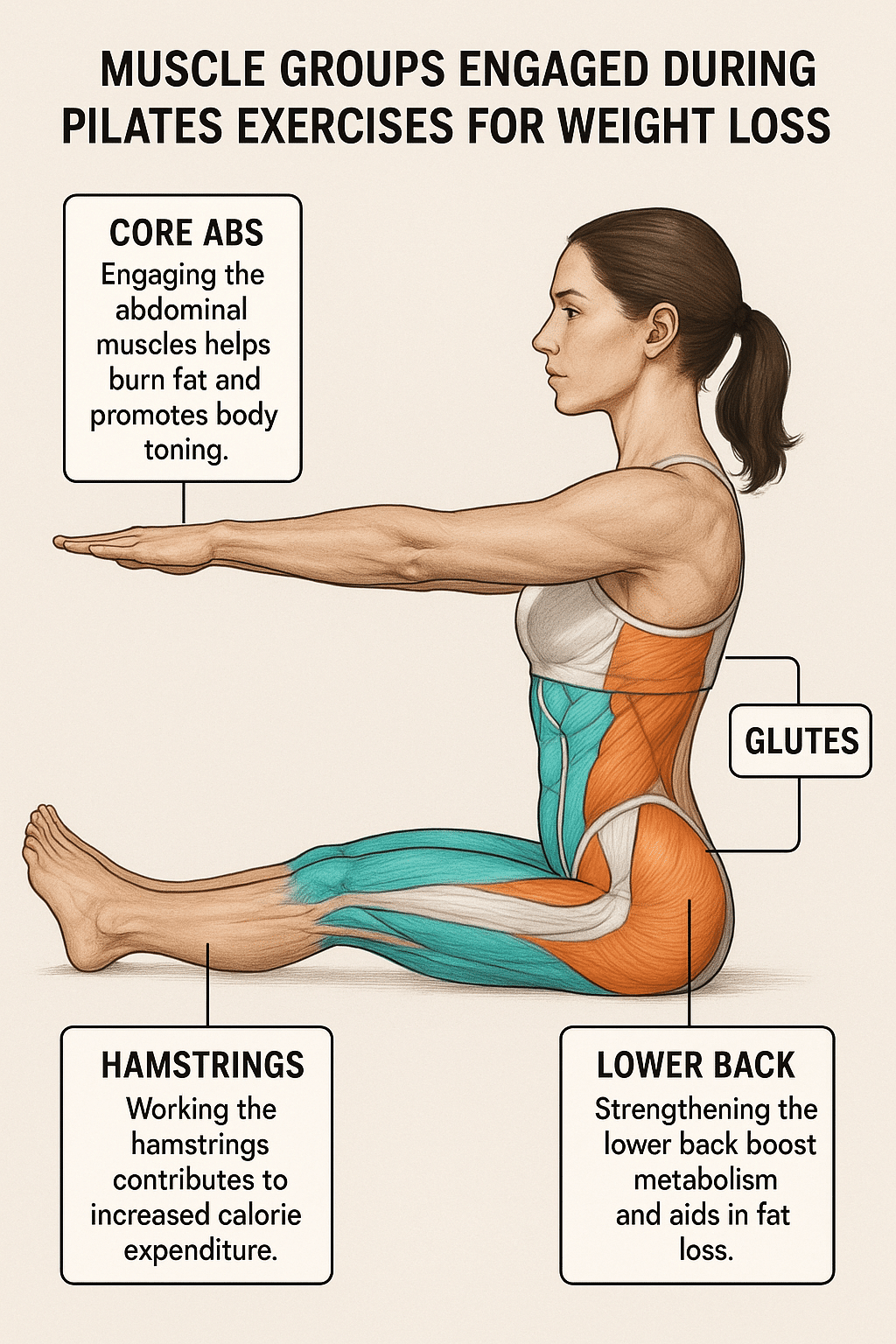
Central to Pilates is activating your “powerhouse” — the deep abdominal muscles, pelvic floor, lower back, and hips. These stabilizers anchor every movement and support balance, coordination, and alignment.
Strong core muscles enable you to perform more complex exercises safely and efficiently, enhancing calorie burn. For example, engaging your transverse abdominis (a deep core muscle) during exercises increases overall intensity and works muscles that are often ignored in regular workouts.
Resistance and Time Under Tension
Resistance is a key component in muscle toning and fat loss, and Pilates cleverly uses your own body weight and equipment-based resistance bands or balls to provide this challenge. Maintaining time under tension—how long muscles are actively engaged during an exercise—stimulates muscle growth and metabolic response.
By holding controlled positions and focusing on slow precision, Pilates lengthens your muscles in a fat-burning “sweet spot.” Resistance bands like those from Stott Pilates or the Balanced Body Pilates Circle can amplify this effect, creating enough muscle stimulation to trigger fat metabolism without heavy impact.
Incorporating Flexibility and Mobility for Fat Loss
Flexibility and mobility aren’t only about feeling good—they play a strategic role in weight loss. Tight muscles restrict movement efficiency, leading to energy leaks and compensation injuries that sideline your workouts.
Pilates promotes increased flexibility through stretches integrated into the routine, improving joint range of motion and circulation. Enhanced mobility means better exercise performance, increased calorie burn, and injury prevention.
Top 5 Pilates Exercises for Weight Loss
Now, let’s get practical! Here’s an in-depth look at five potent Pilates exercises that can accelerate your weight loss journey.
The Hundred: Full-Body Activation for Calorie Burn and Core Engagement
The Hundred is a staple Pilates move that ignites your cardiovascular system and core simultaneously. It serves as an excellent warm-up and calorie burner.
Step-by-Step Guide to Performing The Hundred
- Lie on your back with legs in tabletop (knees bent 90 degrees, shins parallel to the floor).
- Lift your head, neck, and shoulders off the mat, engaging your core.
- Extend arms alongside your hips, about 6 inches off the floor.
- Pump your arms up and down in small movements, inhaling for five pumps, exhaling for five pumps.
- Complete 10 sets of breaths (100 pumps total).
- Keep your spine neutral and avoid neck strain by supporting your head with your hands if needed.
Benefits and Modifications
The Hundred elevates heart rate and improves endurance while building abdominal strength. Beginners can keep feet on the floor or use a pillow under the head for support. Using a Balanced Body Pilates Ball between your thighs intensifies the core engagement by activating inner thigh muscles too.
Roll-Up: Strengthening Core and Enhancing Flexibility
The Roll-Up is like Pilates’ version of a sit-up but performed with controlled articulation that targets your abdominals and spine flexibility.
Proper Technique and Common Mistakes
- Lie flat with legs extended and arms reaching overhead.
- Inhale to prepare; exhale slowly peeling your spine off the mat vertebra by vertebra, reaching toward your toes.
- Inhale sitting tall, then exhale as you roll down slowly.
- Avoid jerky movements or using momentum.
- Don’t strain your neck; keep it aligned with your spine.
Using Balanced Body Pilates Ball to Increase Effectiveness
Placing a small Pilates Ball under your lower back can provide tactile feedback, encouraging precise spinal articulation and strengthening postural muscles during the movement.
Crisscross: Targeting Obliques and Boosting Metabolic Rate
Crisscross is highly effective for sculpting obliques and ramping up metabolic rate by involving twisting combined with core strengthening.
Equipment-Free Variations and Intensity Options
Performing the basic Crisscross involves lying on your back, hands behind your head, and alternately twisting the torso to touch opposite elbow to knee while extending the other leg. To increase intensity, hold a resistance band wrapped around your feet or wear ankle weights.
Remember to keep your neck elongated and avoid pulling on your head.
Single Leg Stretch: Improving Coordination and Calorie Burn
This exercise helps refine coordination while engaging your core and legs, contributing to calorie expenditure.
- Lie on your back, lift head and shoulders.
- Pull one knee gently towards your chest while extending the other leg out straight.
- Switch legs smoothly, maintaining steady breath.
- Use Stott Pilates Resistance Bands around your feet to add challenge.
Pelvic Lift: Engaging Glutes and Lower Abs for Fat Loss
Pelvic Lift strengthens the glutes and lower abdominals—key muscles often underutilized.
Enhancing With Stott Pilates Resistance Bands
Place a resistance band just above your knees to activate your hip abductors and glutes more intensely. Lie flat, lift your pelvis forming a bridge, and slowly lower down, emphasizing control.
Advanced Pilates Moves and Challenges for Enhanced Fat Burning
Once you’re comfortable with basic moves, increasing intensity and variety is key for continuous weight loss progress.
Introducing the Pilates by Izzy Challenge Program
The 15 Day Sweat & Sculpt Challenge, offered by STRONG by Izzy, blends Pilates with HIIT to explode calorie burn while building strength and mental resilience. This intermediate-advanced program lasts 15 days, includes 40–60 minute workouts, and requires small weights and ankle weights for added resistance.
Using the Merrithew Stability Chair for Strength and Endurance
The versatile Merrithew Stability Chair adds a new dimension to Pilates by incorporating balance, stability, and harder resistance. Its adjustable spring tension and dual pedals allow for varied exercises improving strength and endurance—a perfect tool for fat-burning workouts.
Incorporating Peak Pilates Foot Corrector for Balance and Posture
The Peak Pilates Foot Corrector strengthens foot muscles, crucial for balance and gait efficiency. Strong, stable feet improve your ability to perform Pilates exercises with better control, translating to more effective workouts and greater calorie burn.
Designing a Pilates Weight Loss Routine
Beginner-Friendly Pilates Exercises to Lose Belly Fat
Start with foundational moves like The Hundred, Roll-Up, and Pelvic Lifts. Aim for 3 sets of 10-15 reps per exercise, performed 3-4 times per week. Gradually increase duration and intensity by incorporating resistance bands and Pilates balls.
Combining Pilates with Cardio and Strength Training for Optimal Results
Pilates shines as a complementary workout alongside cardio. For fat loss, alternate Pilates days with moderate cardio sessions like brisk walking, cycling, or jump rope. Incorporate full-body strength training once or twice weekly for muscle building.
Sample Weekly Workout Plan Including Equipment and Equipment-Free Options
| Day | Workout Focus | Equipment Needed |
|---|---|---|
| Monday | Pilates Core and Flexibility | Mat, Balanced Body Pilates Ball |
| Tuesday | Cardio (e.g., cycling) | None |
| Wednesday | Pilates Resistance Training | Stott Pilates Resistance Bands, Chair |
| Thursday | Rest or Gentle Stretch | Balanced Body Pilates Arc |
| Friday | Pilates Full-Body Challenge | Weights, Ankle Weights (Izzy Challenge) |
| Saturday | Cardio + Basic Pilates Review | None / Pilates Ball |
| Sunday | Rest and Recovery | Pilates Circle and Foot Corrector |
Consistency is key, and mixing equipment-free and equipment-enhanced workouts keeps motivation high.
Recovery and Injury Prevention in Pilates Workouts
Benefits of Balanced Body Pilates Arc and Pilates Circle for Stretching and Recovery
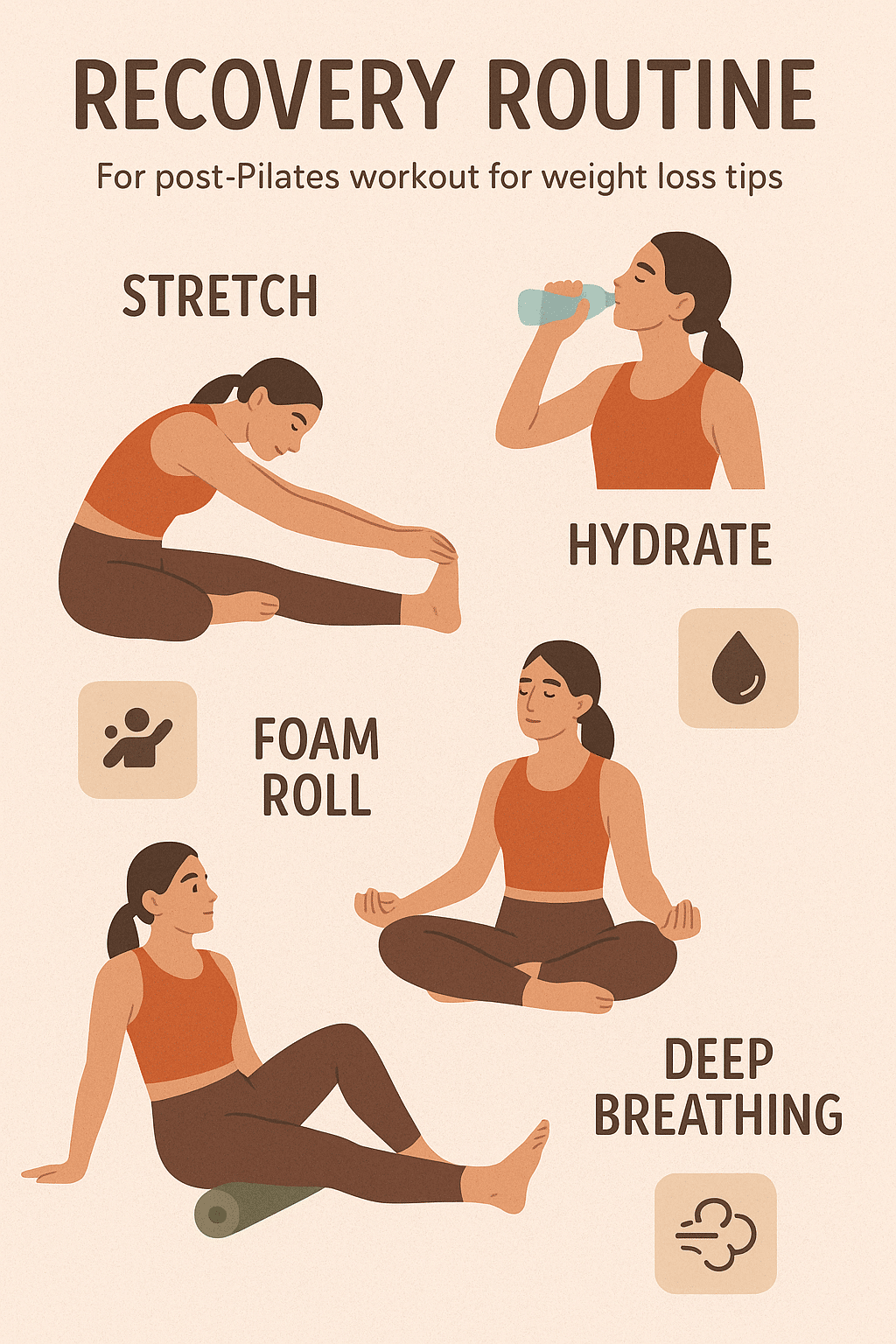
Recovery enhances fat loss by preventing injury and muscle fatigue. The Balanced Body Pilates Arc supports spinal extension and stretching post-workout, while the Pilates Circle adds gentle resistance for muscle activation during recovery sessions.
Strategies to Avoid Common Pilates Injuries
- Never sacrifice form for reps—precision is crucial in Pilates.
- Warm up thoroughly and include proper cool-down stretches.
- Use props like balls and bands to assist movements when necessary.
- Listen to your body and modify exercises if you feel pain or discomfort.
Nutrition Tips to Complement Pilates for Effective Weight Loss
How Diet Influences Pilates Performance and Weight Loss
Fueling your body properly allows you to maximize Pilates workouts and recover quickly. Opt for nutrient-dense foods rich in protein, healthy fats, and complex carbohydrates to support lean muscle repair and maintain steady energy levels.
Sample Meal Guidelines to Support Lean Muscle Building and Fat Burning
- Breakfast: Greek yogurt with mixed berries and chia seeds
- Lunch: Grilled chicken salad with quinoa and avocado
- Snack: A handful of nuts and an apple
- Dinner: Baked salmon, steamed veggies, and sweet potato
Hydration is equally crucial—aim for at least 8 cups of water daily.
The Unique Advantage of Pilates: Combining Strength, Flexibility, and Mindfulness
Why Pilates Fosters Sustainable Weight Loss Compared to High-Impact Workouts
Pilates’ low-impact nature lowers injury risk and suits all fitness levels, fostering consistent exercise habits. Its focus on breath, control, and full-body integration ensures you develop a balanced physique that supports long-term health and metabolic function.
Long-Term Benefits for Athletic Performance and Mental Resilience
Beyond weight loss, Pilates enhances athletic performance by improving core strength and balance. Mentally, it cultivates resilience and mindfulness, helping you navigate challenges and maintain motivation over time.
Final Tips for Staying Motivated and Consistent with Pilates for Weight Loss
Tracking Progress Beyond the Scale
Use measurements, strength milestones, improved posture, and increased flexibility to measure progress instead of relying solely on the scale.
Incorporating Variety with Pilates Equipment
Explore using resistance bands, Pilates balls, the Stability Chair, and other tools like the Balanced Body Pilates Arc and Stott Pilates Resistance Bands to keep workouts engaging and effective.
FAQs
1. What are the best Pilates exercises for weight loss at home?
The Hundred, Roll-Up, Crisscross, Single Leg Stretch, and Pelvic Lift are effective and can be done at home with minimal or no equipment.
2. How can I use resistance bands to increase fat burning in Pilates?
Resistance bands add extra muscle engagement by creating tension. Incorporate bands during exercises like Pelvic Lifts or Single Leg Stretch to challenge muscles further and boost calorie burn.
3. Is Pilates effective for losing belly fat?
Yes, especially exercises targeting the core such as Crisscross and The Hundred, which strengthen abdominals and increase metabolic rate.
4. Can Pilates combined with cardio improve weight loss results?
Combining Pilates with cardio creates a dynamic routine balancing muscle toning and high-calorie burn, accelerating fat loss and improving cardiovascular health.
5. What Pilates equipment is recommended for beginners interested in weight loss?
Start with a Balanced Body Pilates Ball, Stott Pilates Resistance Bands, and consider the Balanced Body Pilates Arc for flexibility exercises. As you advance, equipment like the Merrithew Stability Chair can be introduced.
Key Takeaways
- Pilates enhances weight loss by building lean muscle, improving metabolism, and encouraging mindful exercise.
- Deep core activation and breath control are central to maximizing fat burning during Pilates.
- The Hundred, Roll-Up, Crisscross, Single Leg Stretch, and Pelvic Lift are top exercises to include.
- Equipment like Stott Pilates Resistance Bands and the Merrithew Stability Chair can amplify workouts.
- Combining Pilates with cardio and proper nutrition yields the best weight loss results.
- Recovery tools like the Balanced Body Pilates Arc aid muscle restoration and injury prevention.
- Tracking progress through strength, posture, and endurance metrics keeps motivation high.
Conclusion
Pilates exercises for weight loss offer a unique combination of strength, flexibility, and mindfulness that can transform not just your body, but your entire approach to fitness. Whether you’re just beginning or looking to deepen your practice, focusing on form, including powerful core engagements like The Hundred and Roll-Up, and integrating equipment such as resistance bands and Pilates balls will turbocharge your fat-burning journey.
Remember, sustainable weight loss is a marathon, not a sprint. Pilates helps you build a resilient body and calm mind, making it easier to stay consistent, prevent injury, and enjoy every step of your fitness evolution.
Ready to take the plunge? Start incorporating these Pilates exercises for weight loss into your routine today, explore programs like the Pilates by Izzy Challenge, and invest in quality equipment to maximize your efforts. Your leaner, stronger self is just a Pilates mat away!
Happy training!